
As beauty technology continues to advance, the line between professional salon treatments and at-home skincare solutions has become increasingly blurred. Technologies that were once exclusive to dermatology clinics and high-end beauty salons—such as RF, EMS, IPL, and LED light therapy—are now widely available in home use beauty devices.
This shift has raised an important question for consumers and industry buyers alike: how do home use beauty devices truly compare to professional salon equipment? Understanding the differences, advantages, and limitations of each is essential for brands deciding product positioning, as well as distributors and retailers targeting the right customer segments.
This article provides an in-depth comparison of home use beauty devices and professional salon equipment, covering technology, performance, safety, cost, user experience, and market demand.
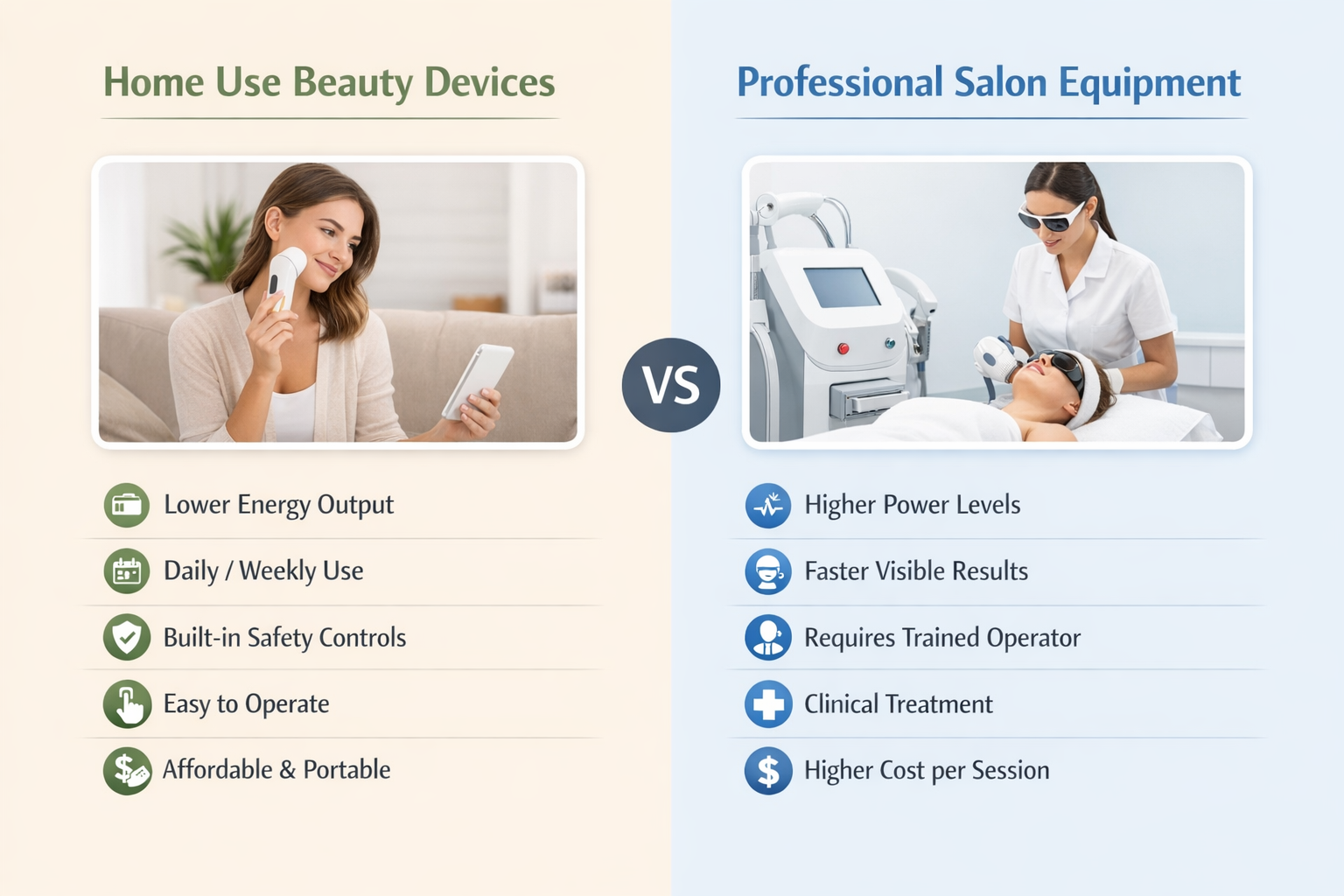
Defining Home Use Beauty Devices and Professional Salon Equipment
Home use beauty devices are designed for personal, non-professional use in everyday environments. They prioritize safety, ease of operation, compact size, and affordability while delivering gradual, cumulative results over time.
Professional salon equipment, by contrast, is built for trained operators in controlled environments. These machines typically deliver higher energy output, require technical expertise, and are intended for intensive treatments with faster, more dramatic results.
Although both categories often use similar core technologies, their design philosophies and regulatory requirements differ significantly.
Technology Comparison: Same Principles, Different Power Levels
At a fundamental level, home use and professional beauty devices rely on the same scientific principles. RF devices heat the dermis to stimulate collagen, EMS devices activate muscles through electrical impulses, IPL devices target hair follicles using light energy, and LED devices use specific wavelengths to affect skin behavior.
The key difference lies in energy intensity and treatment depth. Professional equipment operates at higher power levels, allowing practitioners to achieve quicker and more visible results in fewer sessions. Home use devices, on the other hand, are intentionally limited in output to ensure consumer safety.
This lower energy does not mean home devices are ineffective; rather, they are designed for frequent, long-term use, producing gradual improvements with consistent application.
Safety Design and Risk Management
Safety is one of the most significant differentiators between home use beauty devices and professional salon equipment. Home devices are engineered with multiple built-in safeguards, such as automatic shut-off features, skin contact sensors, temperature limits, and pre-programmed treatment modes.
Professional equipment assumes operator training and clinical oversight. While salons follow strict protocols, the machines themselves often allow manual adjustments that require experience to use correctly.
From a regulatory perspective, home use beauty devices must meet stricter consumer safety standards in many markets, as they are intended for unsupervised use. This emphasis on safety strongly influences design, materials, and software controls.
Treatment Results: Immediate Impact vs Long-Term Improvement
Professional salon treatments are known for delivering faster and more noticeable results. Higher energy output enables deeper tissue penetration, making them suitable for advanced skin concerns such as severe wrinkles, deep pigmentation, or stubborn hair growth.
Home use beauty devices focus on maintenance, prevention, and gradual enhancement. While results may take longer to appear, they are often sufficient for mild to moderate concerns and appeal to consumers who value consistency over intensity.
Many users now view home devices as a complement to professional treatments, using them to extend results between salon visits rather than replace them entirely.
User Experience and Convenience
Convenience is where home use beauty devices clearly outperform professional equipment. Home devices allow users to perform treatments on their own schedule, without appointments, travel, or recurring service fees.
Professional salon treatments require time commitments, scheduling, and repeated visits, which can be a barrier for busy consumers. While the in-salon experience may feel more luxurious, it is not always practical for long-term maintenance.
This shift toward convenience has significantly contributed to the growing popularity of home beauty devices, especially among younger consumers and working professionals.
Cost Structure and Long-Term Value
Cost is another major factor in comparing home use beauty devices and professional salon equipment. Professional treatments often involve high upfront and recurring costs, particularly for procedures such as IPL hair removal or RF skin tightening.
Home use devices typically require a one-time purchase, making them more accessible to a broader consumer base. Over time, users often perceive home devices as offering better value, especially for treatments that require ongoing maintenance.
From a B2B perspective, this affordability expands the addressable market and increases repeat purchase potential through product upgrades and complementary devices.
Skill Requirements and Learning Curve
Professional salon equipment requires trained operators who understand skin anatomy, device settings, and safety protocols. Certification, hands-on training, and experience are essential to delivering effective treatments.
Home use beauty devices are designed for simplicity. Clear instructions, intuitive interfaces, and automated programs allow users with no technical background to operate them safely.
This ease of use is a critical factor in customer satisfaction and product adoption, particularly in markets where consumers are new to beauty technology.
Customization and Personalization Capabilities
Professional treatments can be highly customized based on skin type, condition severity, and treatment goals. Skilled practitioners can adjust parameters in real time, offering a tailored experience.
Home use beauty devices are increasingly incorporating personalization features as well. Adjustable intensity levels, skin sensors, and app-based controls allow users to customize treatments within safe limits.
While customization in home devices is more constrained, it continues to improve as technology evolves, narrowing the gap between home and professional solutions.
Market Demand and Consumer Behavior Trends
Global consumer behavior shows a clear shift toward hybrid beauty routines that combine professional treatments with home maintenance. Consumers no longer view these options as mutually exclusive.
In developed markets, many users start with professional treatments and later invest in home devices to maintain results. In emerging markets, home use beauty devices often serve as the primary entry point due to affordability and accessibility.
This trend creates strong demand across both categories, with home devices experiencing faster growth due to lower barriers to adoption.
Product Lifespan and Usage Frequency
Professional salon equipment is built for heavy, continuous use, often serving dozens of clients per day. Durability, cooling systems, and serviceability are key design priorities.
Home use beauty devices are optimized for lighter, personal use. While they may not match the lifespan of professional machines, they are sufficient for years of regular use when properly designed and manufactured.
Usage frequency also differs significantly. Home devices are intended for weekly or even daily use, while professional treatments are spaced weeks apart to allow for recovery.
Branding, Retail, and Distribution Considerations
From a branding perspective, home use beauty devices offer greater flexibility in retail and e-commerce channels. They are well-suited for online sales, influencer marketing, and direct-to-consumer strategies.
Professional salon equipment is typically sold through specialized distributors and requires longer sales cycles. The target audience is smaller but often willing to invest significantly in high-quality equipment.
For brands deciding between these categories, the choice depends on business model, target customers, and long-term growth strategy.
Regulatory and Certification Differences
Regulatory requirements differ substantially between home use and professional beauty devices. Home devices must comply with consumer product safety standards and often require extensive testing before entering major markets.
Professional equipment may face different regulatory pathways, particularly when used under professional supervision. However, compliance remains critical, especially in regions with strict medical or cosmetic device regulations.
Manufacturers experienced in global compliance are better positioned to support brands in navigating these requirements efficiently.
Choosing the Right Category for Your Brand Strategy
When deciding whether to focus on home use beauty devices or professional salon equipment, brands must consider market positioning, price strategy, and customer expectations.
Home use devices are ideal for brands targeting scalability, e-commerce growth, and mass-market appeal. Professional equipment suits brands focused on high-end services, clinical credibility, and long-term B2B relationships.
Many successful companies operate in both segments, using home devices to build brand awareness and professional equipment to establish authority.
Conclusion: Two Paths Serving Different Needs
Home use beauty devices and professional salon equipment are not competitors in a zero-sum game. Instead, they serve different purposes within an increasingly integrated beauty ecosystem.
Professional equipment delivers high-intensity treatments with immediate results, while home use beauty devices empower consumers to take control of their skincare routines through convenience and consistency.
For buyers, brands, and distributors, understanding these differences is essential to making strategic product decisions. As technology continues to evolve, the gap between home and professional beauty solutions will continue to narrow—creating new opportunities across the global beauty device market.